An NEC draft is useful when it forces the crew to name the room, the equipment, and the condition they actually saw. It is not useful when it invents article numbers or marks a panel compliant because the model wrote the word pass. The construction workflows live in the construction library.
What to look at
Start with the service size, the room, and the equipment nameplate. Then open the adopted NEC edition, not a memory of an older cycle. Working space, GFCI and AFCI locations, and grounding electrodes are the lines that should be traced to a section you can point at.
A field example
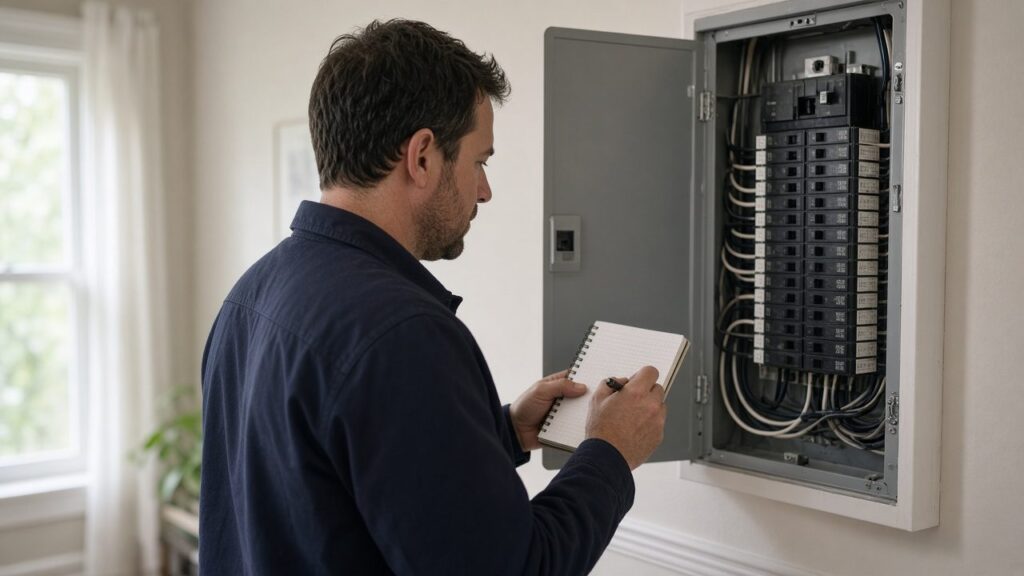
Northline Electric drafted a kitchen-and-bath remodel checklist that marked every receptacle “protected.” The journeyman opened the panel and found one GFCI breaker feeding the garage, while the island receptacles were still standard devices on a different circuit. The corrected checklist lists each room, the device, and a status of verified or not verified. Nobody signed the generated page.
What to leave unverified
Leave any section number unverified if it did not come from the book or the local amendment. Concealed wiring, utility-owned service drops, and electrodes you cannot see stay marked not verified.
Sources to open
Open the NEC edition the jurisdiction has adopted, including any local amendment, and read the GFCI location rule you are relying on. Working-space and grounding lines need the same treatment. A model-code memory from another cycle is not a source.
A practical next step
Sign the checklist only after the open items are either fixed or written as exclusions. File it with the job photos. The workflow for a dwelling service load or a GFCI location list is a starting draft, not the signature.
Related workflow: GFCI Protection Location Checklist.